
In today’s rapidly evolving business environment, operational excellence is no longer a competitive advantage, it is a necessity. Industrial, manufacturing, and process-driven organizations are under constant pressure to deliver higher efficiency, improved visibility, cost optimization, and faster decision-making while managing growing operational complexity. Fragmented systems, manual processes, and siloed data often act as roadblocks to achieving these goals.
To overcome these challenges, organizations must adopt intelligent ERP solutions that go beyond traditional automation. A modern ERP system should act as a unified operational backbone, integrating people, processes, and data into a single, intelligent ecosystem that drives measurable business outcomes.
The Growing Complexity of Modern Operations
Organizations operating in industrial, infrastructure, and project-driven environments manage a wide spectrum of interconnected activities. These typically include:
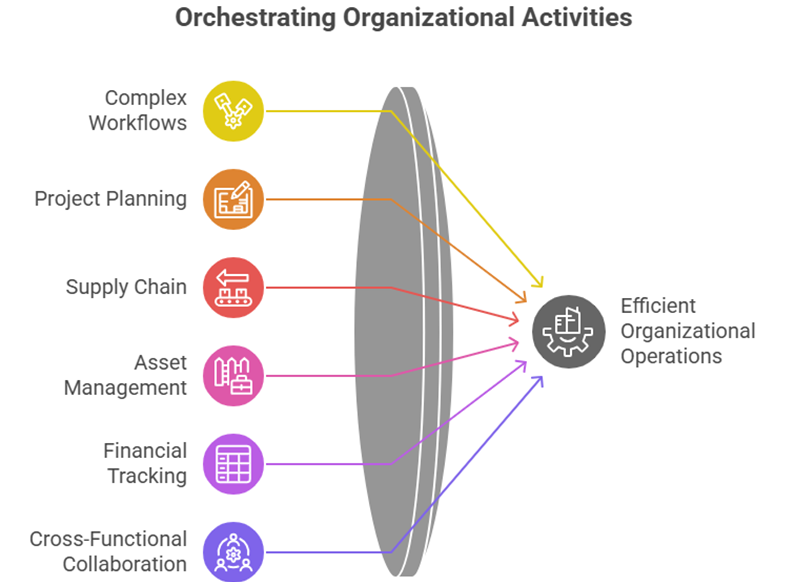
When these functions are managed through disconnected tools or spreadsheets, businesses face recurring challenges such as data inconsistency, duplication of work, lack of real-time visibility, and delayed decision-making. Over time, these inefficiencies directly impact operational costs, customer satisfaction, and profitability.
Operational excellence requires not just digitization, but process alignment, data transparency, and intelligent automation across the organization.
ERP as the Foundation for Operational Excellence
Enterprise Resource Planning (ERP) systems play a critical role in bringing structure, visibility, and control to complex operations. However, traditional ERP implementations often fail to deliver expected value due to poor process mapping, rigid configurations, or lack of alignment with actual business workflows.
An intelligent ERP solution focuses on:
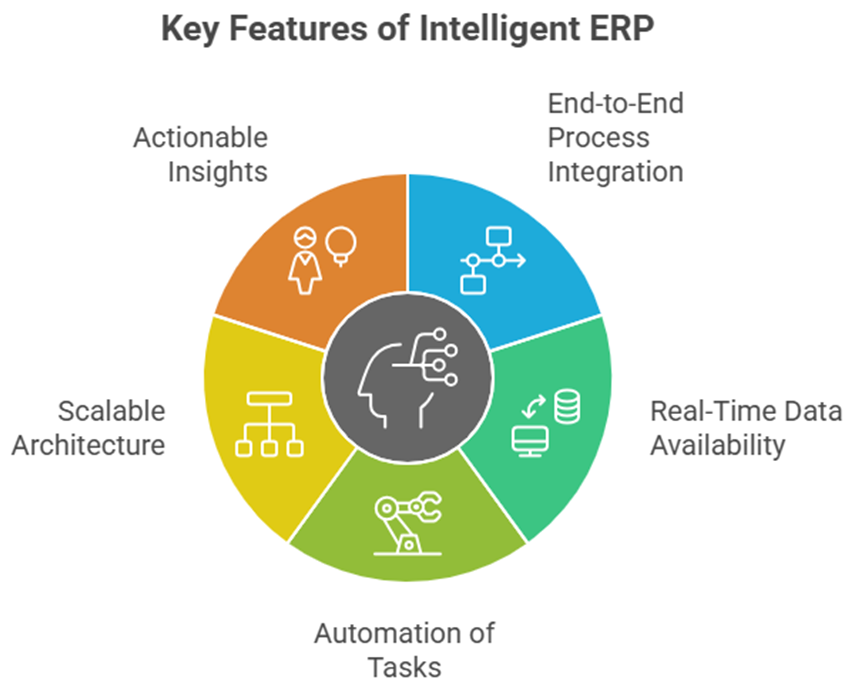
This approach ensures that ERP is not just a system of record, but a system of execution and decision-making.
Odoo: A Unified and Intelligent ERP Ecosystem
Odoo has emerged as a powerful and flexible ERP platform designed to meet the needs of modern, process-driven organizations. Unlike traditional ERP systems that operate in silos, Odoo offers a fully integrated suite of applications that work seamlessly together.
Key capabilities that make Odoo an ideal foundation for operational excellence include:
1. Single Source of Truth
- All business data-operations, finance, inventory, projects, and services—reside within one centralized platform. This eliminates data redundancy and ensures consistency across departments.
2. End-to-End Process Integration
- Odoo enables seamless flow of information from sales and procurement to production, delivery, invoicing, and reporting. This integration reduces manual handovers and minimizes operational delays.
3. Automation of Core Operations
- Routine and repetitive tasks such as approvals, inventory updates, billing, and reporting can be automated, freeing teams to focus on higher-value activities.
4. Modular and Scalable Architecture
- Organizations can start with essential modules and scale progressively as their business grows without disrupting existing operations.
By aligning ERP functionality with real operational workflows, Odoo helps organizations simplify complexity while improving efficiency and control.
Process-Driven ERP Implementation: The Key to ROI
While technology is a critical enabler, the success of an ERP initiative depends heavily on how well it aligns with business processes. A process-driven ERP implementation ensures that technology supports the way the organization actually operates, rather than forcing teams to adapt to rigid system limitations.
Key principles of a process-driven approach include:
- Deep analysis of existing workflows
- Identification of inefficiencies and bottlenecks
- Redesigning processes for optimization and scalability
- Configuring ERP to mirror real-world operations
- Validating outcomes through iterative testing
This methodology ensures faster user adoption, reduced resistance to change, and quicker realization of return on investment (ROI).
Intelligent Dashboards for Data-Driven Decision-Making
One of the most powerful aspects of intelligent ERP solutions is their ability to transform raw data into actionable insights. Leadership teams require timely, accurate, and meaningful information to steer the organization effectively.
Odoo’s real-time dashboards provide:
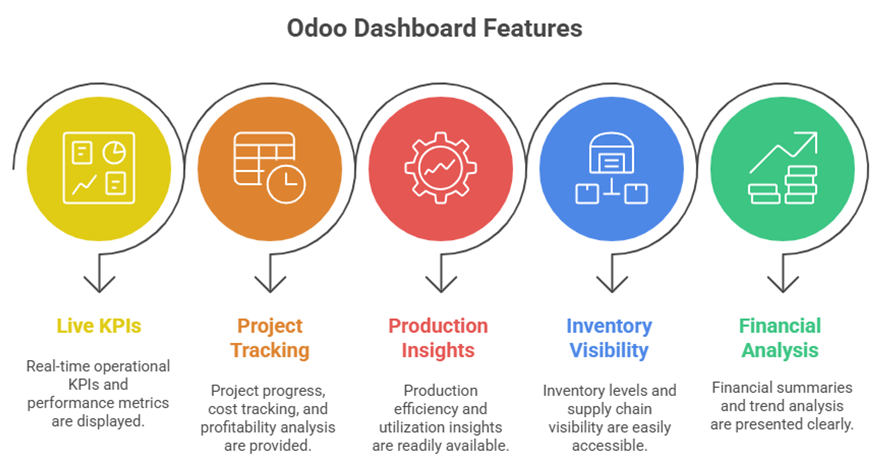
By eliminating manual reporting and delayed data consolidation, these dashboards empower decision-makers to respond proactively to challenges, optimize resources, and drive continuous improvement.
Driving Operational Efficiency across Departments
An intelligent ERP solution impacts every function within the organization:
- Operations & Production: Streamlined workflows, optimized scheduling, reduced downtime, and improved execution control.
- Inventory & Supply Chain: Accurate stock visibility, improved procurement planning, reduced wastage, and timely replenishment.
- Projects & Services: Better project tracking, cost control, milestone visibility, and improved delivery timelines.
- Finance & Compliance: Integrated financial data, real-time cost monitoring, automated invoicing, and compliance readiness.
- Management & Leadership: Complete visibility into organizational performance with data-backed decision-making.
This holistic impact ensures that operational excellence is embedded across the enterprise, not limited to individual departments.
Namah Softech: Transforming ERP into a Business Advantage
Namah Softech brings deep domain expertise and execution excellence to ERP implementations. Rather than treating ERP as a software deployment, Namah Softech approaches it as a strategic transformation initiative focused on delivering tangible business outcomes.
What differentiates Namah Softech’s ERP approach:
Deep Process Mapping
- Every engagement begins with an in-depth understanding of business operations, ensuring the ERP solution reflects real operational needs.
Proof of Concept (PoC) Validation
- Structured PoCs validate workflows early, reducing implementation risks and ensuring alignment with business expectations.
Dedicated Project Experts
- Specialized consultants are assigned to each project, ensuring focused execution and minimal disruption to ongoing operations.
Continuous Support and Stability
- Round-the-clock support ensures system reliability, rapid issue resolution, and uninterrupted business continuity.
ROI-Focused Solutions
- Solutions are designed to optimize costs, eliminate inefficiencies, and maximize long-term return on ERP investments.
This approach ensures that ERP systems deliver measurable improvements in efficiency, visibility, and profitability.
Achieving Sustainable Growth with Intelligent ERP
Operational excellence is not a one-time achievement, it is a continuous journey. As organizations scale, diversify, or enter new markets, their systems must evolve accordingly. Intelligent ERP solutions provide the flexibility and scalability required to support long-term growth.
By combining the robust capabilities of Odoo with Namah Softech’s implementation expertise, organizations gain:
- Faster time-to-value
- Reduced operational costs
- Improved transparency and control
- Enhanced collaboration across teams
- Scalable systems aligned with future growth
- Measurable and sustainable ROI
Driving operational excellence requires more than isolated improvements, it demands a unified, intelligent approach to managing the entire enterprise. Process-driven ERP solutions serve as the foundation for this transformation, enabling organizations to streamline operations, enhance visibility, and make informed decisions with confidence.
With Odoo as the technology platform and Namah Softech as the implementation partner, businesses can transform operational complexity into a strategic advantage, achieving efficiency, agility, and sustainable growth in an increasingly competitive landscape.